Panel Sessions
Moderated multi-speaker discussions on operations, analytics, deployment challenges, and utility best practices. June 2 & 4, 2026.
Artificial Intelligence for Secure, Measurable, and Adaptive Low-Inertia Power Systems
The rapid integration of renewable and converter-based generation is transforming power systems into low-inertia, data-rich, and dynamically complex networks. Ensuring their secure and reliable operation demands new paradigms in system monitoring, control, and decision-making. This panel explores how artificial intelligence (AI), data analytics, and digital-twin technologies can enhance the security, adaptability, and measurability of future power systems.
Short Biography
Guglielmo Frigo (Senior Member, IEEE) received the Ph.D. degree from the School of Information Engineering, University of Padova, in 2015, with a dissertation on compressive sensing (CS) theory applications. He has served as a Post-Doc with the University of Padova, from 2015 to 2017, and the Swiss Federal Institute of Technology, Lausanne, Switzerland, from 2018 to 2020. In 2020, he was a Foreign Guest Researcher with the NIST, Gaithersburg, MD, USA. He is currently a Senior Scientist with METAS, Bern, Switzerland, where he is responsible for the research strategy in energy and mobility. His current research interests include the development of enhanced measurement infrastructures for electrical systems.
Challenges in measurement management for efficient system monitoring
Designing frameworks to metrologically test and validate synchronized measurements and analysis methods.
Short Biography
Dr. Paolo Attilio Pegoraro is an Associate Professor of Instrumentation and Measurement with the Department of Electrical and Electronic Engineering, University of Cagliari, Italy. His research interests include the design of new measurement techniques for modern power networks, with attention to synchronized measurements and state estimation. He has authored or co-authored over 200 scientific papers. Dr. Pegoraro is a member of IEEE IMS TC 39 (Measurements in Power Systems) and of IEC TC 38/WG 47. He is also a member of IEEE EPPC Working Group on Energy. He is Senior Area Editor for Power Instrumentation and Measurement of the IEEE Transactions on Instrumentation and Measurement and the General Chair of the IEEE International Workshop on Applied Measurements for Power Systems (AMPS). Dr. Pegoraro has been awarded the prestigious IEEE IMS Technical Award 2025, with the citation: "For outstanding contributions to the advancement of synchronized measurements and monitoring systems for power grids".

Neural Ordinary Differential Equations for Forecasting Power System Dynamics
Using physics-informed neural networks to model and predict transient behaviour in low-inertia power systems.
Short Biography
Mert Karacelebi is a PhD candidate in the DAI Energy Lab at TU Delft, where he researches AI-based solutions for power system dynamic security. His expertise spans power system operation, control, dynamics, analysis, optimization, and machine learning applications in energy systems. He holds an M.Sc. in Electrical Engineering and Information Technology from ETH Zurich (2018–2021) and a B.Sc. in Electrical and Electronics Engineering from Middle East Technical University (METU), Turkey (2014–2018).

Machine Learning for Securing Power Systems under Low Inertia
Applying AI and data-driven methods to improve dynamic stability, control, and resilience in renewable-rich, converter-dominated grids.
Short Biography
Dr. Panagiotis Papadopoulos is a Reader (Associate Professor) in Electrical and Electronic Engineering at the University of Manchester, UK. His research focuses on power system dynamics, stability, and the uncertainty arising from renewable and converter-interfaced technologies. He is a UKRI Future Leaders Fellow and a member of the Alan Turing Institute for Decarbonisation programme, where he applies machine learning to energy-system resilience and control. He has received recognition from the IEEE Power & Energy Society, including the Outstanding Engineer Award (UK & Ireland, 2021).
Data quality in Wide Area Monitoring, Protection, and Control systems
Assessing data quality as a necessity to modernize the digital infrastructure in low-inertia systems.
Short Biography
Prof. Dr. Sara Sulis is a Full Professor of Electrical and Electronic Measurements at the University of Cagliari (Italy). She holds a Ph.D. in Industrial Engineering from the University of Cagliari (2006) and a M.S. in Electrical Engineering. She is Associate Editor of the IEEE Transactions on Instrumentation and Measurement and Secretary of IEEE TC 39 "Measurements in Power Systems". Her research activities focus on metrological qualification of the measurement processes, power quality monitoring, and distributed measurement systems designed for modern power grids. In recent years, her research has focused on methodologies to perform both state estimation and harmonic sources estimation based on synchronized measurements. She is author and co-author of more than 160 scientific papers published in international journals and proceedings of international conferences sponsored by IEEE Societies and IMEKO.
Next-Generation of Grid Awareness: Machine Learning and PMU Analytics for Secure Power System Operation
This panel presents four complementary perspectives on how PMUs, WAMS, and machine learning techniques are moving towards a new generation of grid awareness. The first topic addresses the short-term voltage instability phenomena, a problem of IBR-dominated weak grids. Here, a novel Maximum Lyapunov Exponent-based algorithm for the detection of this phenomena will be presented. Then, event detection and frequency-dynamics monitoring using real PMU data from the Brazilian Interconnected Power System will be presented. A two-level methodology combining wavelet-based spectral analysis and deep learning enables robust multi-label classification of real disturbances, while a complementary framework quantifies how increasing IBR penetration is degrading both global and regional frequency behaviour. Moreover, a self-healing transmission grid concept for real-time dynamic vulnerability assessment (DVA) leveraging PMU data and long-short term memory neural networks will be discussed. This approach identifies evolving symptoms of system stress, including transient, oscillatory, voltage, and frequency instability, supporting timely activation of adaptive corrective controls and system integrity protection schemes. Finally, a data-driven transient stability assessment (TSA) designed for fast operation in low-inertia grids will be described. The approach is based in PMU measurements and uses the Maximum Lyapunov Exponent (MLE) and machine learning models to provide rapid model-free stability indicators capable of triggering corrective actions to prevent loss of synchronism.
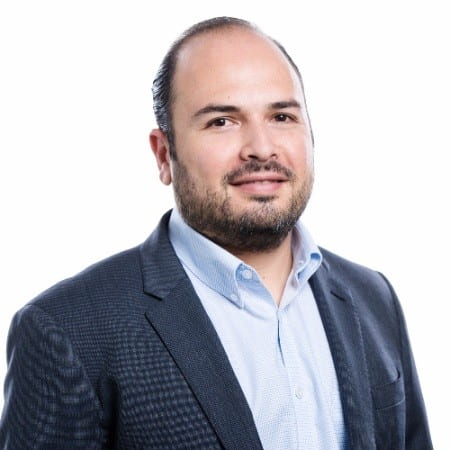
Short Biography
Dr. Rafael Segundo obtained a PhD degree in electrical engineering from Imperial College London in the UK in 2012. Subsequently, he joined the power systems group at KTH in Stockholm, Sweden, as a postdoctoral researcher and, since July 2014, he has been working for the ZHAW in Switzerland, where he is Senior Lecturer. Dr. Segundo is the founder and chair of the IEEE Working Group on Big Data & Analytics for Transmission Systems and chair of the international workshop DynPOWER. His research areas include the analysis of the dynamics and control of electrical power systems, the effects on stability with the massive integration of renewable sources, the application of data-driven techniques to improve situational awareness of the system, as well as the development of indices to measure the level of security in the transmission system.
Wide-Area Event Classification and Frequency Dynamics Assessment in the Brazilian Interconnected Power System
The increasing complexity of modern power systems, driven by the growing integration of inverter-based resources (IBRs) and the decentralization of generation, has intensified the need for advanced monitoring and analysis tools. This work presents two complementary measurement-based methodologies using real PMU measurements from Brazilian Interconnected Power System (BIPS). Together, these findings highlight the importance of enhanced wide-area monitoring, robust event classification, and refined frequency stability metrics to support faster and more reliable decision-making in large-scale interconnected power systems.
Short Biography
Daniel Dotta (Member, IEEE) received the B.S., M.S., and Ph.D. degrees from the Federal University of Santa Catarina (UFSC), Florianópolis, Brazil, in 2000, 2003, and 2009, respectively. After working at the Federal Institute of Santa Catarina (IFSC), he joined the University of Campinas (UNICAMP) in 2015, where he is currently an Associate Professor. He completed two sabbatical periods at Rensselaer Polytechnic Institute (RPI), Troy, NY, USA, from 2012 to 2013 and from 2018 to 2019. His work focuses on innovation, applied research, and industry collaboration to address complex challenges in the energy transition.

Data-Driven Detection of Long-Term Voltage Instability
Long-term voltage stability has been a major research topic for several decades. Early approaches were primarily model-based, relying on network topology information and SCADA-time-frame measurements. With the emergence of data-driven algorithms, the topic gained renewed interest and new possibilities for real-time monitoring. This work presents an extended real-time voltage instability identification method based on synchronized phasor measurements and Thevenin equivalent.
Short Biography
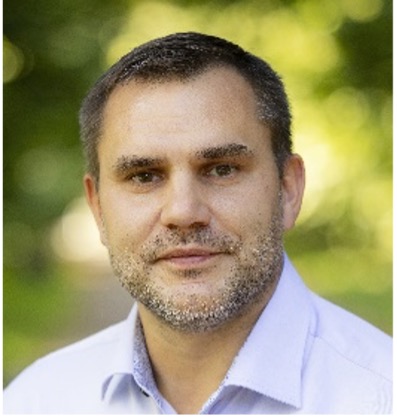
Glauco Taranto received the Ph.D. degree from the Rensselaer Polytechnic Institute, Troy, NY, USA, in 1994. In 2006, he was a Visiting Fellow with the Centro Elettrotecnico Sperimentale Italiano, Milan, Italy. He is currently a Professor with the Federal University of Rio de Janeiro (COPPE/UFRJ), Rio de Janeiro, Brazil. He is the Chair of the Power System Stability Subcommittee, IEEE PES PSDP Technical Committee, and the IEEE TF on "Integrating Relay Models with RMS Dynamic Simulation." He was an Editor of IEEE Transactions on Power Systems from 2016 to 2020.
Data-Driven Transient Stability Assessment and Control in Modern Power Systems
The increasing complexity of power systems, driven by renewable integration and reduced inertia, demands fast and reliable methods for transient stability assessment (TSA). Traditional model-based approaches are computationally intensive and unsuitable for real-time operation. Maintaining accurate models and keeping them updated is increasingly challenging in modern grids. This talk presents data-driven TSA techniques that leverage phasor measurement unit (PMU) data and advanced algorithms such as Maximum Lyapunov Exponent (MLE) and machine learning models. We discuss how MLE-based nearest neighbor algorithms enable fast, model-free TSA, and compare their performance with deep learning approaches like Convolutional Neural Networks (CNN). Furthermore, we explore how these assessments can trigger corrective control actions such as braking resistors, fast valving, and reactive power support to prevent loss of synchronism. Case studies on Nordic and IEEE benchmark systems demonstrate that data-driven TSA combined with corrective control significantly enhances system resilience and operational security.
Short Biography
Robert Eriksson (Senior Member, IEEE) received the M.Sc. and Ph.D. degrees in Electrical Engineering from the KTH Royal Institute of Technology, Stockholm, Sweden, in 2005 and 2011, respectively. From 2013 to 2015, he was an Associate Professor at the Technical University of Denmark (DTU). After DTU, he worked for several years at the Swedish National Grid (Svenska kraftnät) in various roles, including as a team leader. He is currently a Full Professor in the Division of Electricity at Uppsala University and continues part-time at Svenska kraftnät. His research interests include power system dynamics and stability, resilience, automatic control, HVDC systems, dc grids, and data-driven approaches for stability assessment and control.

Wide Area Monitoring Systems (WAMS) and Phasor Measurement Unit (PMUs) initiatives across South Africa
South Africa has significantly expanded its WAMS, deploying PMUs across the national transmission network. This presentation highlights the transition from passive monitoring to machine learning–enabled stability assessment, drawing on LSTM networks trained on real PMU data to forecast low-frequency oscillation damping. Key lessons from South Africa's PMU initiatives will be discussed.
Short Biography
Teboho Machabe is a Chief Engineer at National Transmission Company South Africa (NTCSA) within the System Operator Operations Planning division. He is responsible for the planning, commissioning, and advanced analytics of synchrophasor infrastructure supporting real-time grid operations and post-disturbance analysis. He holds a BSc in Electrical Engineering and an MSc in Electrical Engineering (with Distinction) from the University of the Witwatersrand. Teboho is an active council and senior member of the South African Institute of Electrical Engineers (SAIEE) and serves on the CIGRE Working Group C2.18 on Wide Area Monitoring Systems.
Application of Big Data & Analytics to Maintain the Secure Operation of Transmission Systems — Advances by the IEEE WG
This panel brings together leading contributors from the IEEE WG on transmission Systems to discuss recent advances, technical developments, and practical innovations shaping modern power system security. First, an introduction of the WG's mission and achievements will be presented. Then, an overview of Technical Reports TR100, and TR104, highlighting key methodologies, benchmark models, and standardized practices for data-driven stability evaluation will be introduced. Moreover, the integration of machine learning solutions for low-inertia power systems, emphasizing challenges and opportunities (TR136) will be discussed. Finally, the Synchrophasor Analytics Data-Exchanging Initiative SANDI will be presented.
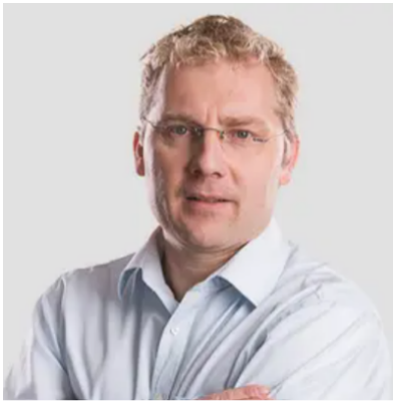
Short Biography
Petr Korba is professor of electric power systems at the Zurich University of Applied Sciences and deputy head of the institute of energy systems since 2012 and 2015, respectively. He received his Dipl.-Ing. degree in electrical engineering from the Czech Technical University, Prague, in 1995 and his Dr.-Ing. degree from the University of Duisburg, Germany, in 1999. He became a member of academic staff at the University of Manchester UMIST until 2001 when he joined ABB Switzerland Ltd. He held different positions in the business unit "power automation" and later worked for more than 10 years as a principal scientist at ABB Corporate Research. Dr. Korba has published over 100 articles in international journals and conferences in the field of automatic control and electric power systems, and authored/co-authored over 100 US and European patents. He was nominated for the Best European Patent Award in 2011 for achievements in wide-area monitoring and control of electric power systems.
Overview of the IEEE WG on Big Data & Analytics for Transmission Systems
The IEEE WG on Big Data & Analytics for Transmission Systems was established in 2020 and has brought together a solid group of members working in three fundamental pillars: Applications for advanced metering infrastructure, integration of data-driven solutions to low-inertia power systems, and real-time lab demonstrations and open access databases.
Short Biography
Dr. Rafael Segundo obtained a PhD degree in electrical engineering from Imperial College London in the UK in 2012. Subsequently, he joined the power systems group at KTH in Stockholm, Sweden, as a postdoctoral researcher and, since July 2014, he has been working for the ZHAW in Switzerland, where he is Senior Lecturer. Dr. Segundo is the founder and chair of the IEEE Working Group on Big Data & Analytics for Transmission Systems and chair of the international workshop DynPOWER. His research areas include the analysis of the dynamics and control of electrical power systems, the effects on stability with the massive integration of renewable sources, the application of data-driven techniques to improve situational awareness of the system, as well as the development of indices to measure the level of security in the transmission system.
PES TR-100 and PES TR-104: Situation of data analytic tools in different TSOs and applications in global power systems
This presentation will provide an overview of the group's first two technical reports. It will also analyze the contribution of these reports in relation to the most pressing current limitations in transmission systems, such as the scarcity of existing applications based on synchronous phasor data and the existing methodologies that can be used in control rooms with the current infrastructure.
Short Biography
Emilio Barocio received his PhD in Electric Power Engineering from CINVESTAV, Mexico, in 2003. During his PhD studies in 2001, he was a visiting scholar at the University of Wisconsin–Madison. He was awarded the Marie Curie Incoming International Fellowship at Imperial College London (ICL) in 2013, participating in an academic-industry project involving interdisciplinary experts, industry leaders and renowned universities. Following this research, he was honored with the Prize Paper Award by the IEEE PES Technical Committee and the IEEE Power System Dynamics Performance Committee in 2018. During the summers of 2018 and 2019, he was a visiting researcher at the ZHAW in Switzerland, collaborating with ZHAW and the Swiss grid operator on a power system monitoring project.
Data-Driven Methods for Secure Low-Inertia Grids
This presentation discusses the latest research in emerging challenges associated with the operation and security of low-inertia power systems resulting from the large-scale integration of inverter-based resources. It will be shown how the latest report TR-136 provides a structured overview of low-inertia system characteristics, including a taxonomy of security and stability issues spanning frequency, voltage, oscillatory, and converter-driven phenomena.
Short Biography
Mert Karacelebi is a PhD candidate in the DAI Energy Lab at TU Delft, where he researches AI-based solutions for power system dynamic security. His expertise spans power system operation, control, dynamics, analysis, optimization, and machine learning applications in energy systems. He holds an M.Sc. in Electrical Engineering and Information Technology from ETH Zurich (2018–2021) and a B.Sc. in Electrical and Electronics Engineering from Middle East Technical University (METU), Turkey (2014–2018).

SANDI: The Synchrophasor Analytics Data-Exchanging Initiative
In this presentation, tangible results from the WG will be presented, which are related to the real-time lab demonstrations and open access databases subgroup lead. Particularly, a recently developed open-source synchrophasor platform referred to as SANDI will be introduced. It will be shown how SANDI has already allowed to capture synchrophasor measurements from important events worldwide such as the Chilean blackout in February 2025 and the infamous Iberian blackouts in April 2025, respectively. Finally, it will be also shown the flexibility that SANDI offers to work with real-data and test user defined algorithms in real-time.
Short Biography
Hector Chavez received his BSc and MSc in Electrical Engineering from the University of Santiago, in the city of Santiago, Chile in 2004 and 2006 respectively and in 2013 he received his Ph.D. degree in Electrical Engineering from the University of Texas at Austin, Austin TX. Subsequently, he was a Postdoctoral fellow during one year in the Department of Electric Power Systems, at the KTH Royal Institute of Technology, Stockholm, Sweden. He is currently an Associate Professor and has served as head of the Department of Electrical Engineering at the University of Santiago, in Chile.
SGSMA Research Directions
Smart Grid Synchronized Measurements and Analytics is an emerging area with roots in early analytics using data from intelligent electronic devices such as digital relays, digital fault recorders and phasor measurement units. After over 40 years of development, it now focuses extensively on new data recording and management platforms and machine learning/AI analytics. This panel reflects on recent research activities in this area with experiences shared by researchers from Academia in Brazil, China, USA, and Sweden.

Short Biography
Miroslav M. Begovic (LFIEEE'04) is Moore Professor and Associate Director of the Smart Grid Center, and former Department Head (2015–2023) of Electrical and Computer Engineering at Texas A&M University. Prior to that, he was Professor (1989–2014) and Chair of the Electric Energy Research Group in the School of Electrical and Computer Engineering at Georgia Tech. Dr. Begovic obtained his PhD from Virginia Tech University. His research interests are in monitoring, analysis, and control of power systems, as well as development and applications of renewable and sustainable energy systems. Dr. Begovic is a Life Fellow of IEEE and is a former President ('12–'18) of the IEEE Power and Energy Society and Chair of IEEE PES Governing Board ('10–'18), recipient of the IEEE PES Meritorious Service Award (2019) and the IEEE PES Ramakumar Family Award for Excellence in Renewable Energy (2022).

Real-Time AI/ML Application for Data-Driven Power Grid Analytics
The increasing complexity of the modern power grid, driven by inverter-based resources, distributed energy systems, and tighter operational margins, demands real-time, data-driven analytics beyond traditional model-centric approaches. This work presents future research needs for real-time AI/ML application in synchronized grid data analytics that enables fast anomaly detection, event versus bad-data classification, event type identification, spatial localization, and operator decision support under strict latency constraints. The proposed approach leverages streaming machine learning models operating on synchronized measurements from PMUs, µPMUs, and high-speed sensors. Unsupervised and physics-informed learning techniques continuously learn normal system behavior and detect deviations in real time. Advanced classifiers should distinguish grid events, such as faults, asset failure, oscillations, and inverter interactions given measurement errors, communication and timing issues. Spatiotemporal and graph-based learning models can exploit network topology to classify and localize events even with incomplete observability. To meet scalability and latency requirements, edge vs centralized computing need to be analyzed for fast detection and dynamically adjust data reporting rates, enabling event-driven data delivery from affected regions. This talk will also highlight critical future needs in latency-aware AI, physics-informed and trustworthy ML, scalable edge intelligence, and the integration of real-time analytics with operator-centric decision-making, to enable resilient grid operations.
Short Biography
Is the Chair of the Computer Science and Electrical Engineering Department and Raymond J. Lane Professor at West Virginia University. He leads a team of faculty, staff, and students passionate about advancing computer science, cybersecurity, electrical engineering, computer engineering, AI, robotics, and biometrics. Dr. Srivastava holds a joint appointment as a Senior Scientist at Pacific Northwest National Laboratory and also serves as an Adjunct Professor at Washington State University, mentoring graduate students in electric power engineering. In previous roles, Dr. Srivastava has worked internationally in visiting positions at institutions such as RTE in France, RWTH Aachen University in Germany, Indian Institute of Technology Kanpur in India, and at Asian Institute of Technology in Thailand.

Synchronized measurement technology and its application in disturbance identification for power systems with high penetration of renewable energy
To protect the environment, countries around the world are integrating renewable energy sources into their power grids. However, this rapid growth in renewable energy has brought new safety and stability challenges to power systems, such as transformer failures, deteriorating power quality, and even large-scale power outages caused by cascading fault. Therefore, there is an urgent need for real-time synchronized monitoring technologies to support the safe and stable operation of power systems with high penetration of renewable energy. First, a high-precision dynamic phasor measurement method based on a complex band-pass filter has been proposed, which pioneers the extension of the measurement perspective from the time domain to the frequency domain. This method reduces the amplitude measurement error from 1% to 0.05%, while expanding the measurement frequency band from 45-55 Hz to 20-80 Hz. And a short-time window harmonic measurement method based on spectral line interpolation fitting has been proposed, which, for the first time, achieves a measurement bandwidth covering from 0 Hz-20 Hz and 80 Hz-2500 Hz. This method reduces the amplitude measurement error from 5% to 0.5%, filling a technological gap in the field. Then a transient waveform dictionary generation method based on clustering pruning optimization has been proposed to effectively characterize disturbance characteristics, realizing a root mean square error of less than 1% for disturbance waveforms and achieve a compression ratio of 5.33-8.33. After that, a method for generating time-frequency maps through second-order motif difference field has been proposed to achieve the image-based encoding and extraction of high-dimensional features of disturbance signals. The loss function is optimized based on metric learning, expanding the decision boundary and achieving identification accuracy from 84% to 96%.
Short Biography
Hao Liu is a professor and doctoral advisor selected as a Chinese national-level young talent. He has engaged in research on wide area synchronized measurement technology and its applications for a long time, presiding over 2 National Natural Science Foundation projects and 1 National Key Technology Research and Development Program for Smart Grid project. He has published over 90 papers in SCI/EI journals as the first or corresponding author, has been granted 16 U.S. patents and 45 Chinese patents, and has received 4 first prizes at the provincial and ministerial levels.
Future Research Needs for Dynamic Operational Security
This presentation will discuss the research needs for securing operational security and give examples from the Nordic power system which is undergoing rapid transformation. As electrification accelerates and converter-based generation replaces traditional synchronous resources, the system faces new challenges in maintaining frequency stability, active power balancing and sufficient transmission capacity between areas. Conventional approaches based on static, conservative limits derived from offline simulations are increasingly inadequate in a future characterized by variability and uncertainty. This presentation will highlight opportunities for research and innovation in dynamic stability assessment, real-time operational limits, and cross-border coordination, ensuring that frequency control, balancing, and transmission capacity remain reliable cornerstones of a sustainable and resilient power system.
Short Biography
Robert Eriksson (Senior Member, IEEE) received the M.Sc. and Ph.D. degrees in Electrical Engineering from the KTH Royal Institute of Technology, Stockholm, Sweden, in 2005 and 2011, respectively. He was an Associate Professor at the Technical University of Denmark (DTU) from 2013 to 2015, then worked for several years at the Swedish National Grid in various roles including team leader. He is currently a Full Professor in the Division of Electricity at Uppsala University and continues part-time at Svenska kraftnät. His research interests include power system dynamics and stability, resilience, HVDC systems, dc grids, and data-driven stability assessment and control.
A Time-Synchronized Adaptive Power Flow Control of Embedded HVDC links in the Brazilian Interconnected Power System
Brazil has historically relied on hydropower to supply over 90% of its annual electricity demand. In recent years, however, this dominance has declined as wind and solar generation have grown significantly. Having a continental size, the Brazilian Interconnected Power System (BIPS) relies heavily on a large network of AC transmission lines, plus 6 HVDC links with a DC transmission capacity of 20 GW in total. The growth of renewable energy with its intermittent characteristics, paired with market-based generation dispatch, has put new demands on the control systems of embedded HVDC links. To mitigate loop power flows in the hybrid AC–DC network, the embedded HVDC link employs a time-synchronized angle difference control scheme between its rectifier and inverter terminals. The study presents the outcomes of this prospective control approach, which adapts DC power flow setpoints in real time according to variations in solar and wind generation dispatch.
Short Biography
Glauco Taranto received the Ph.D. degree from the Rensselaer Polytechnic Institute, Troy, NY, USA, in 1994. In 2006, he was a Visiting Fellow with the Centro Elettrotecnico Sperimentale Italiano, Milan, Italy. He is currently a Professor with the Federal University of Rio de Janeiro (COPPE/UFRJ), Brazil. He is the Chair of the Power System Stability Subcommittee, IEEE PES PSDP Technical Committee, and the IEEE TF on "Integrating Relay Models with RMS Dynamic Simulation." He was an Editor of IEEE Transactions on Power Systems from 2016 to 2020.
Applications of Synchronized Measurements and Analytics in Latin American Power Systems
Wide area monitoring systems (WAMS) are now an important part of the operations in the power systems of Latin America. Some electrical systems in the region form interconnections, such as the Electrical Interconnection System for Central American Countries (SIEPAC), which can be also synchronized with the electrical power system in Mexico. In the case of South America, the possibility of interconnection between electrical systems is even more complex due to geographical challenges and the distances between the different systems. However, there are interconnections, such as Ecuador and Colombia, as well as interconnections between neighboring countries in the Southern Cone. Thanks to synchrophasor measurements, it is possible to monitor the interconnections and disconnect the systems to prevent the propagation of oscillations. The operators in Latin America have been developing different type of applications and in this panel, the experts will share their insights about the experiences in their corresponding region.
Short Biography
Héctor Chávez is an Associate Professor at the Universidad de Santiago de Chile (USACH), where he served as Director of the Department of Electrical Engineering from 2020 to 2024. He holds a Ph.D. in Electrical and Computer Engineering from the University of Texas at Austin. His research focuses on the integration of renewable and distributed energy resources, frequency stability in power systems with high renewable penetration, synthetic inertia, and energy market design for sustainability. Prof. Chávez has led major research initiatives using real-time simulation to assess the stability and operational impacts of high-renewable grids, supported by competitive national funding.
PMU network deployment in Argentina: Current status, future and innovative developments
An overview of the WAMS in Argentina, highlighting particular applications and the development of PMUs in the Southern Cone, with particular focus on Argentina.
Short Biography
Pablo Leibovich is an Electronics Engineer and holds a PhD in Engineering from the National University of La Plata (UNLP). He works at the Institute of Technological Research for Electrical Networks and Equipment (IITREE-UNLP), and his areas of expertise include power system measurements and analysis, smart grids, and synchrophasor measurements.
PMU-based dynamic assessment of power systems stability: Small and large perturbation analysis
An overview of methodologies for dynamic assessment of power systems stability in development and use in the context of the MedFasee Project (led by UFSC and INESC P&D Brazil), including pilot applications of automatic event analysis, data convergence and identification of oscillations using real data of the Brazilian Interconnected Power System.
Short Biography
Guido Rossetto Moraes completed his bachelor's and master's degrees in electrical engineering from the Federal University of Santa Catarina (UFSC) in 2013 and 2015, respectively. In 2019 he received the Ph.D. in Electrical Engineering at the Politecnico di Milano, Italy, working as a researcher in different European projects. He is currently doing postdoctoral research at Labplan (UFSC) and working as a researcher at INESC P&D Brazil. His areas of interest include static and dynamic analysis of power systems, modelling based on machine learning, and applications of synchrophasor data.
On the Advancement of Industrial-Grade Hardware-in-the-Loop Validation of Dynamic Mode Decomposition for Power Grid Oscillation Monitoring
Demonstrates the feasibility of integrating DMD into industrial-grade controllers using efficient algorithms. A comparative analysis with other methods, along with hardware-in-the-loop validation, confirms the accuracy and computational efficiency of DMD for real-time applications, identifying local modes, interarea oscillations, multimodal behavior, and mode shapes.
Short Biography
Emilio Barocio received his PhD in Electric Power Engineering from CINVESTAV, Mexico, in 2003. During his PhD studies in 2001, he was a visiting scholar at the University of Wisconsin–Madison. He was awarded the Marie Curie Incoming International Fellowship at Imperial College London in 2013 and was honored with the Prize Paper Award by the IEEE PES Technical Committee and the IEEE Power System Dynamics Performance Committee in 2018. During the summers of 2018 and 2019, he was a visiting researcher at ZHAW in Switzerland, collaborating on a power system monitoring project with the Swiss grid operator.

OpenWAMS: Brazil's Open Source Leap in Wide Area Grid Monitoring
The openWAMS project will be introduced — an innovative open source wide area monitoring system (WAMS) implemented by Brazil's independent system operator (ONS), operational in the control room since mid-2024. It provides real-time, high-sampling rate synchronized measurements of fundamental electrical parameters, enabling immediate disturbance detection, grid stability monitoring, and accurate post-event analysis.
Short Biography
Ricardo Lira, MSc, is a Power Systems Engineer with over 15 years of international experience in Energy Management and phasor-based solutions. He is a founding member of the openWAMS project at ONS (Brazil), where he focuses on innovation, system deployment and the promotion of the PMU technology within the company. His professional background includes prior roles as Project Delivery Manager at GE Vernova in Paris, Technical Specialist at GE Grid Solutions in São Paulo, and Power System Engineer at Alstom Grid in Edinburgh. Additionally, he contributes to the industry as a member of CIGRE Working Group C2, focusing on the evolution of power system operation and control.
Reliability and Resilience — Women and the Challenges of Electrical Infrastructure
As the energy sector evolves at unprecedented speed, strategic planning has become more critical than ever. Led by a diverse panel of women leaders, this session explores how women observe the challenges of electrical infrastructure in their respective areas, considering reliability and resilience. The panel discusses how technical expertise not only informs high-level strategy, but also supports navigating complex trade-offs, shaping resilient infrastructure, and building inclusive energy futures — from system reliability and digital transformation to decarbonization technologies and data-driven decision-making.
Short Biography
Solange David has been for 28 years working in the Brazilian Electricity Sector, 18 of which were at the Energy Market Operator, as executive legal manager and vice president (2014-2020). She is Chair of CIGRE International Women in Energy – 2022-2026. Member of CIGRE-Brazil, where she participates in C5 - Regulatory and Market Studies Committee. She has PhD in Sciences - Electrical Engineering and is also Lawyer specializing in the Brazilian electrical sector. Solange David has a Bachelor of History, focused in the Brazilian electrical sector and is Professor of Electric Power Law and Brazilian Electricity Market, value chain of the electricity sector, new technologies, energy transition. She has Pro bono activities such as mentoring Brazilian Women in Energy/EmpodereC, member of board of Directors Brazilian Women in Biogas and is also Founder of the Women Writing Energy movement (WWE).
Technical expertise and Women involvement in CIGRE
This part of the panel addresses the goal to increase women participation as technical experts in CIGRE. The Women In Energy (WiE) have been invited to have members in all the Study Committees of CIGRE, and the Technical Council works to increase women participation across working groups, SC chairs, and other roles throughout the organisation.
Short Biography
CIGRE Vice-President Technical Rannveig Loken has worked in the power system sector for more than 30 years. She works for Statnett, the TSO of Norway, and holds a Master of Science in Electric Power Engineering from the Norwegian University of Science and Technology (NTNU). She is the Chair of the Norwegian committee of CIGRE, and was the Chair of the Organising Committee for NRCC CIGRE Symposium in Trondheim 2025. She has been involved with CIGRE since 2006 and was the Chair of CIGRE SC B5 Protection and Automation between 2018 and 2024. In 2024 she received the Honorary Award from CIGRE.
Short Biography
Andrea Armijo is a civil engineer with studies in renewable energy, strategy, innovation, digital transformation, and financial management. She has more than 20 years of experience leading highly complex projects in the renewable energy, green hydrogen, infrastructure, mining, and innovation sectors. She has held strategic roles as Business Development Manager, Origination & New Market Manager, and Strategic and Energy Senior Consultant at companies such as CVE Group, Mainstream, Enel, Hatch, and Ingenovo, actively contributing to the development of the energy transition in Chile and Latin America. Andrea was recognized by the Ministry of Labour as a "Power Woman in Energy" in 2019 for her contribution to Chile's energy sector.
IEC 61850 Based Synchrophasor Communications
As modern power systems transition toward highly dynamic, inverter-based environments, the integration of high-speed monitoring and control is paramount. This panel explores the convergence of IEC 61850 standards and synchrophasor technology, providing a comprehensive roadmap for the next generation of Wide Area Monitoring, Protection, and Control (WAMPAC) systems.

Short Biography
Dr. Alexander Apostolov received MS degrees in Electrical Engineering and Applied Mathematics, and a Ph.D. from the Technical University in Sofia, Bulgaria. He has 50 years of experience in power systems protection, automation, control, and communications. He is presently Principal Engineer for OMICRON Electronics in Los Angeles, CA. He is an IEEE Life Fellow and Member of the IEEE PES Power Systems Relaying and Control (PSRC) Committee, and past Chairman of the Relay Communications Subcommittee. He received the IEEE PES Distinguished Service Award in 2007. He is a member of IEC TC57 working groups 10, 17, and 19, and has been involved in the development of UCA 2.0 and IEC 61850 for more than 25 years.
Overview of CIGRE Technical Brochures related to synchrophasor communication
Summary of findings from CIGRE Technical Brochures from B5 and C4 on synchrophasors and their applications.
Short Biography
CIGRE Vice-President Technical Rannveig Loken has worked in the power system sector for more than 30 years. She works for Statnett, the TSO of Norway, and holds a Master of Science in Electric Power Engineering from NTNU. She is the Chair of the Norwegian committee of CIGRE, was the Chair of CIGRE SC B5 Protection and Automation between 2018 and 2024, and received the Honorary Award from CIGRE in 2024.
Interfacing of PMU with the process
Description of the interface between PMU and Merging Unit and the different possible allocations of functions in substation equipment. They can be allocated in the process interfacing equipment, a bay level IED, substation level IED or in virtualised environment.
Short Biography
A graduate in electrical engineering from the University of Stuttgart (Germany), Volker Leitloff wrote his doctoral thesis at the Laboratoire d'Électrotechnique de Grenoble (Grenoble Institute of Technology). He worked in EDF's Research and Studies Division from 1994 to 2002, focusing on electricity system protections and technologies. He joined RTE in 2003 in the specialist field of protection, automation and control systems. Volker is president of the IEC's TC 38 and of CENELEC's TC 38 (instrument transformers) and coordinator for the IEC's TC 95 WG2 (protection functions with digital input/output).

Functional Testing of synchrophasor based applications
Overview over testing requirements, methods and tools to perform different types of testing of synchrophasor measurements by PMU. This includes the acceptance testing of the PMUs and the factory and site acceptance testing of the PMU based schemes.
Short Biography
João Jorge is an Electrical Engineer specializing in Power Systems Protection, Control, Communication, Automation & Testing Solutions, acting as IEC 61850 Regional Application Specialist for OMICRON Electronics Latin America. He has a postgraduate degree in Electrical Systems Protection and is pursuing a postgraduate degree in Cyber Security. He is an active member of CIGRE Brazil Study Committee B5.
Time synchronization challenges in IEC 61850-based synchrophasor measurement chains
The transition towards fully digital substations based on IEC 61850 introduces new challenges in synchronization of the measurement chain for synchrophasor estimation. This presentation discusses the role of time synchronization when the PMU receives digital inputs from Stand-Alone Merging Units (SAMUs) via Sampled Values (SV), including management of temporary synchronization losses and assessment of time quality indicators.
Short Biography
Paolo Castello is an Associate Professor with the Department of Electrical and Electronic Engineering at the University of Cagliari, Italy. His research addresses synchrophasor estimation algorithms, synchronized and distributed measurement systems, and the characterization of measurement devices such as phasor measurement units and power quality meters. Paolo Castello has co-authored 80 publications (Scopus, February 2026; h-index: 20). He is a member of the IEEE Instrumentation and Measurement Society, serves as Associate Editor of the IEEE Transactions on Instrumentation and Measurement, and is a member of the CIGRE Working Group JWG C2/C4.1.
Requirements, Testing, and Validation of Large Scale WAMPAC Systems
Modern power systems worldwide are undergoing significant transformations driven by increased interconnection, higher penetration of renewable energy, and growing operational complexity. One critical concern is the potential for non-credible contingencies, such as the simultaneous loss of multiple transmission elements, which can lead to transient instability, system separation, and widespread supply disruptions. To mitigate these risks, system operators increasingly rely on advanced Wide Area Monitoring, Protection, and Control (WAMPAC) systems. These systems leverage synchronized measurements, real-time communication, and coordinated control strategies to enhance situational awareness and enable rapid, automated responses to disturbances. This panel explores the key stages and design considerations involved in deploying large-scale WAMPAC systems for modern power networks, highlighting challenges related to system architecture, communication infrastructure, control strategies, and coordination with existing protection schemes. The discussion also emphasizes the importance of emergency control functions in maintaining stability and minimizing disruption under extreme operating conditions, providing insights applicable to power systems globally.
Short Biography
A graduate in electrical engineering from the University of Stuttgart (Germany), Volker Leitloff wrote his doctoral thesis at the Laboratoire d'Électrotechnique de Grenoble (Grenoble Institute of Technology). He worked in EDF's Research and Studies Division from 1994 to 2002, focusing on electricity system protections and technologies. He joined RTE in 2003 in the specialist field of protection, automation, and control systems. Volker is president of the IEC's TC 38 and of CENELEC's TC 38 (instrument transformers) and coordinator for the IEC's TC 95 WG2 (protection functions with digital input/output).

Testing and commissioning the South Australia Interconnector Trip Remedial Action Scheme
The core components of the South Australia Interconnector Trip Remedial Action Scheme (SAIT RAS) include: Event-Driven Component (EDC): topology-based scheme that monitors weakening or breaks of double circuit transmission corridors. Response-Driven Component (RDC): synchrophasor-based scheme designed to detect complex network events and to limit the need for overcompensation by the EDC. Resource Controller Component (RCC): upstream, it serves as the main interface to ElectraNet's Energy Management System (EMS) and downstream, as the issuer of trip/control signals to resources such as loads, generators and BESSs. SAIT RAS is a complex Wide Area Monitoring, Protection and Control (WAMPAC) scheme that spreads across three Australian states. Its correct operation is critical to maintain system stability not only in South Australia, but also the wider National Electricity Market (NEM). Deploying a complex control scheme of this scale requires layers of testing and significant effort to ensure all scheme components are modelled, validated and documented properly.
Short Biography
Filip Ivanovski is a Technology Manager at CSE Uniserve, managing the protection and control systems portfolio. He has more than 10 years' experience in application support, detailed design, testing, troubleshooting, and commissioning of power system protection and control schemes, with an interest in digital substation design and special protection schemes. Filip holds Bachelor of Engineering (Honours) and Bachelor of Commerce degrees from the University of Melbourne.
From measurement to decision: the role of instrument transformers in WAMPAC systems
Starting from the newly released Standard IEC/IEEE 61869-21 "Uncertainty evaluation in the accuracy test of instrument transformers," this presentation discusses methodological and practical aspects related to the impact of voltage and current transducers in the decision-making processes of a WAMPAC system.
Short Biography
Carlo Muscas (Senior Member, IEEE) is a Full Professor of instrumentation and measurement with the University of Cagliari, Italy. He has authored or co-authored more than 200 scientific articles. His current research interests include the measurement of synchronized phasors, the implementation of distributed measurement systems for a modern electric grid, and the study of power quality phenomena. Prof. Muscas is currently the Chairperson of the TC 39 Measurements in Power Systems of the IEEE Instrumentation and Measurement Society.
Utility Experiences with PMU Applications in Control Room
Over the past decade, many utilities have made significant investments in deploying synchrophasor technologies across their transmission networks. Phasor Measurement Units (PMUs) are now widely installed in substations, providing high-resolution, time-synchronized data with the potential to enhance situational awareness, dynamic monitoring, and real-time decision-making. Despite this progress, the practical use of PMU data in control room operations remains limited at many system operators. In most cases, the challenge is not the availability of data, but the absence of well-defined operational processes, visualization tools, integration with existing Energy Management Systems, and clear roles for operators to act on synchrophasor-based insights. This panel focuses on real-world utility experiences in bringing PMU applications into the control room environment. Drawing on firsthand operational knowledge, panelists will share success stories, lessons learned, and common obstacles encountered when transitioning synchrophasor data from engineering and planning use cases into daily operations. Topics will include organizational and workflow challenges, operator trust and training, application design, and strategies for aligning PMU analytics with operational needs. The discussion aims to provide practical guidance for utilities seeking to move beyond infrastructure deployment toward meaningful operational use of synchrophasor data, helping the audience understand how to overcome barriers and accelerate value realization in the control room.
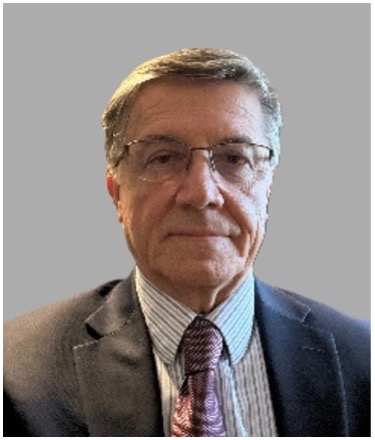
Short Biography
Muhidin (Dino) Lelic, Ph.D. IEEE Life Sr. Member, is Executive Advisor and Director at Danovo Energy Solutions, with over 45 years of experience in synchrophasor technologies, wide-area monitoring systems (WAMS), and grid modernization. He has led and contributed to major synchrophasor initiatives in the U.S. and internationally, including the specification, design, and implementation of the NYISO WAMS system and development of technology roadmaps for ISO New England and other utilities. He holds 26 U.S. and 14 international patents, has coauthored two textbooks, and has published extensively. Dino earned his electrical engineering degrees from the Universities of Sarajevo and Belgrade, and an Executive M.S. from RPI.
ONS Lessons on WAMS Implementation for Real-Time Outage Management in Large-Scale PMU Networks
ONS practical experiences utilizing PMU data within the control room environment, addressing critical challenges of maintaining data quality and availability during major grid disturbances. Covers PMU erratic behavior during de-energization, communication latencies, and loss of measurement consistency during large-scale outages.
Short Biography
Ricardo Lira, MSc, is a Power Systems Engineer with over 15 years of international experience in Energy Management and phasor-based solutions. He is a founding member of the openWAMS project at ONS (Brazil), focusing on innovation, system deployment, and promotion of PMU technology. His background includes prior roles as Project Delivery Manager at GE Vernova in Paris, Technical Specialist at GE Grid Solutions in São Paulo, and Power System Engineer at Alstom Grid in Edinburgh. He contributes to CIGRE Working Group C2, focusing on the evolution of power system operation and control.
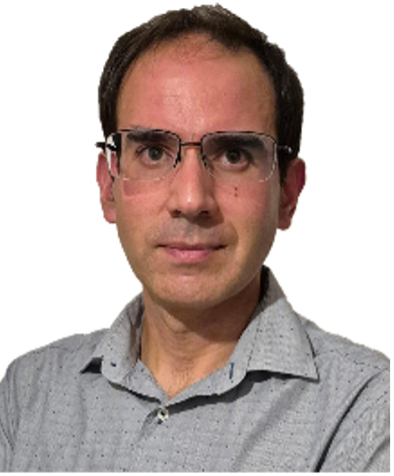
PMU Technology Implementation and Operational Use in the Control Room: The Chilean Experience
Presents the Chilean National Electric System's WAMS and the experience operationalizing synchrophasor data in the control room — from PMU placement criteria and observability of critical corridors, to frequency monitoring, oscillation detection, online Dynamic Security Assessment with AI, and PMU-assisted inertia estimation.
Short Biography
Alberto Trigueros Baratta, MSc, is a power-system engineer at Coordinador Eléctrico Nacional, Chile's independent system operator. He specializes in EMS operations (State Estimator, Online DPF, Security Analysis), integrating WAMS/PMU into the control room, dispatcher training, and Service Restoration Plan studies. His experience spans distribution planning, system studies, and EMS/GMS applications, with 20+ years in the sector.

Importance of Wide Area Monitoring, Protection, and Control to Prevent Large System Disturbances
Modern power systems with large penetrations of renewables, storage, and electric vehicles exhibit more dynamic and faster behavior with increased blackout risks. WAMPAC using synchronized measurement technology offers still untapped opportunities to improve detection and control of fast-developing disturbances, especially for scenarios increasingly common such as system blackouts.
Short Biography
Dr. Damir Novosel, US National Academy of Engineers member and IEEE Fellow, is CEO of Dash Power Partners. He was president of KEMA T&D U.S. and vice president of ABB Global Automation Products, and is recognized as a global industry leader in wide area monitoring protection and control. He led development of the first ABB PMU in the 1990s, chaired the Performance and Standards Task Team for NASPI, and led development of the first industry roadmap for PMU technology used by DOE as a blueprint for US-wide PMU deployment. He holds 18 patents, published over 200 articles, contributed to 8 books, and served as IEEE PES President and VP of Technical Activities.
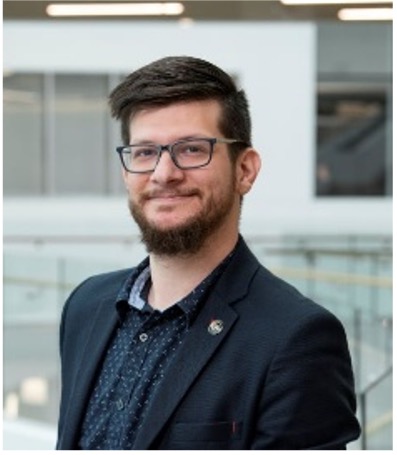
Bringing PMU applications and value propositions to Distribution Grid Control Rooms
The Distribution Task Team (DisTT) within the organization of Novel Applications for Synchronized Power Instrumentation (NASPI) has championed, supported and showcased innovations, test-beds and conceptual propositions for PMU applications in distribution grids. Despite the high value of all recorded use cases, PMU adoption by stakeholders at these grid levels has been sluggish. In this presentation, the NASPI DisTT will review the state-of-practice, the experiences, the ecosystem and the institutional efforts, as we try to envision a roadmap going beyond the specific priorities, roadblocks and weaknesses that utilities face when investing in PMU applications.
Short Biography
Panayiotis (Panos) Moutis, PhD, is Assistant Professor at the Dept. of Electrical Engineering at the City College of New York (CCNY). He has published more than 30 peer-reviewed works and studies how data-driven methods ensure the cost-optimal operation and planning of electrical grids with high shares of renewables. His academic journey includes also Carnegie Mellon University, USA, University of Greenwich, UK, and NTUA, Greece (PhD 2015, MSc 2007). He serves with the IEEE, IET, NASPI, CCAI and IEEE-USA. He has multi-years' industry experience as an engineer, an executive and Marie Curie and Arup fellow. More information: https://panay1ot1s.com/
For information about proposing or participating in a panel session, contact the organizing committee.